

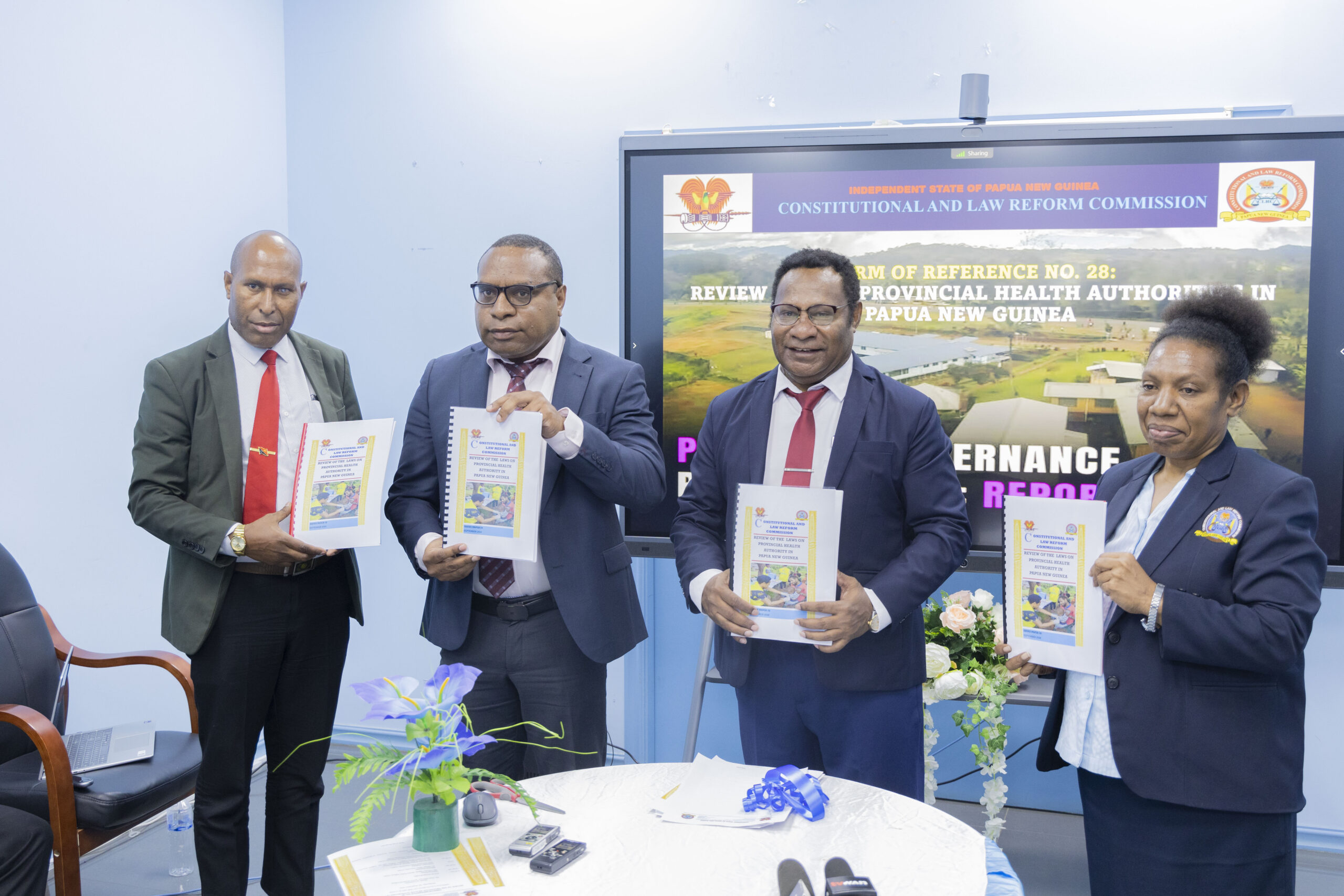
The Constitutional and Law Reform Commission (CLRC) has launched the Issues Paper Terms of Reference No. 28 (TOR 28) – Review of the Provincial Health Authority Act 2007 in Papua New Guinea, commencing a national review of the legal and institutional framework governing Provincial Health Authorities (PHAs) in Papua New Guinea.
TOR 28 was issued to CLRC by the Minister for Justice and Attorney-General in April this year, calling on the Commission to review and recommend necessary reforms on the laws relating to Provincial Health Authorities in Papua New Guinea.
The review comes against longstanding concerns about the delivery and accessibility of health services across the country, including the condition of health facilities, availability of medical supplies, staffing, funding, governance, accountability and coordination between national, provincial and district-level institutions.
The Provincial Health Authority model was introduced in 2007 to improve the integration and management of hospital and rural public health services at the provincial level. Almost two decades on, the CLRC considers it timely to examine whether the existing legal framework continues to adequately support the health needs of Papua New Guineans.
The review will examine the Provincial Health Authorities Act 2007 together with other relevant legislation, including the Provincial Health Administration Act 2007, National Health Administration Act 1997, Public Hospitals Act 1994, Medical Registration Act 1980, Public Finances (Management) Act 1995 and other related laws.
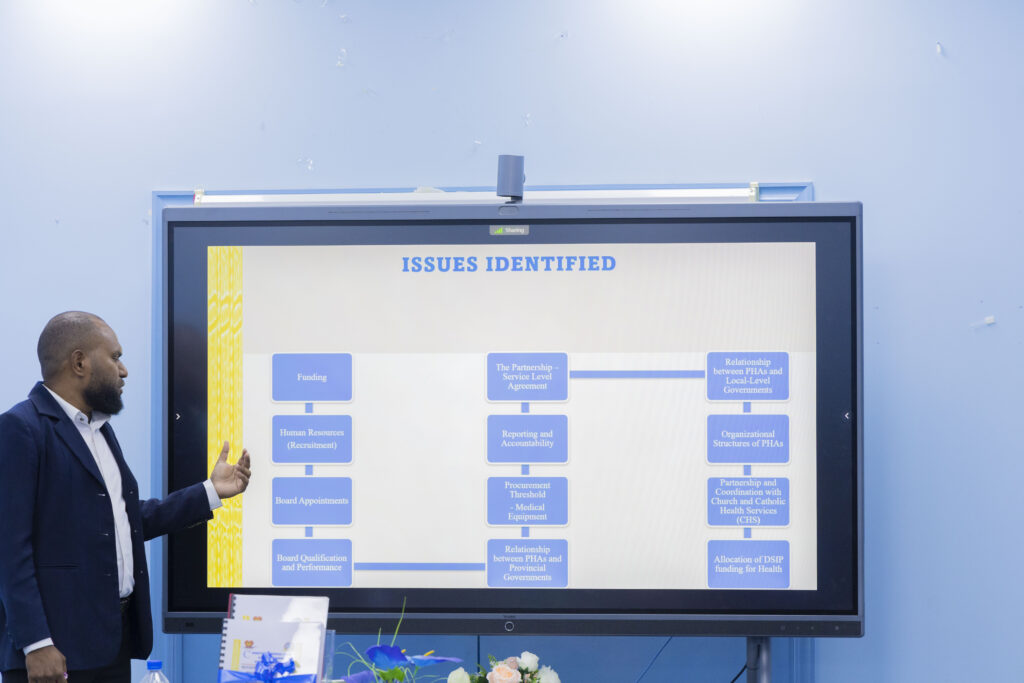
Through CLRC’s desktop research and stakeholder meetings, the Commission has identified 7 key issues under TOR 28 that will be taken out for consultations following the launch of the Issues Paper for TOR 28. These issues are funding, human resource (recruitment), board appointments, The Partnership – Service Level Agreement; Reporting and Accountability; Procurement Threshold; and Board Qualification and Performance.
Newly appointed CLRC Chairman Hon. Desmond Kipa, said the review was ultimately about ensuring that Papua New Guinea’s laws and institutional arrangements support a health system that is responsive to the needs of its people.
“Law reform must ultimately be about people. For a mother in a remote village, health service delivery is not an abstract policy issue. It is about whether there is a functioning health facility nearby, whether essential medicines are available and whether health workers have the support they need to provide care.”
He added, “It (TOR 28) can help clarify responsibilities. It can strengthen accountability. It can support better coordination. And it can provide greater certainty about how public resources are managed and how health services are governed. That is where the role of the CLRC becomes important.”
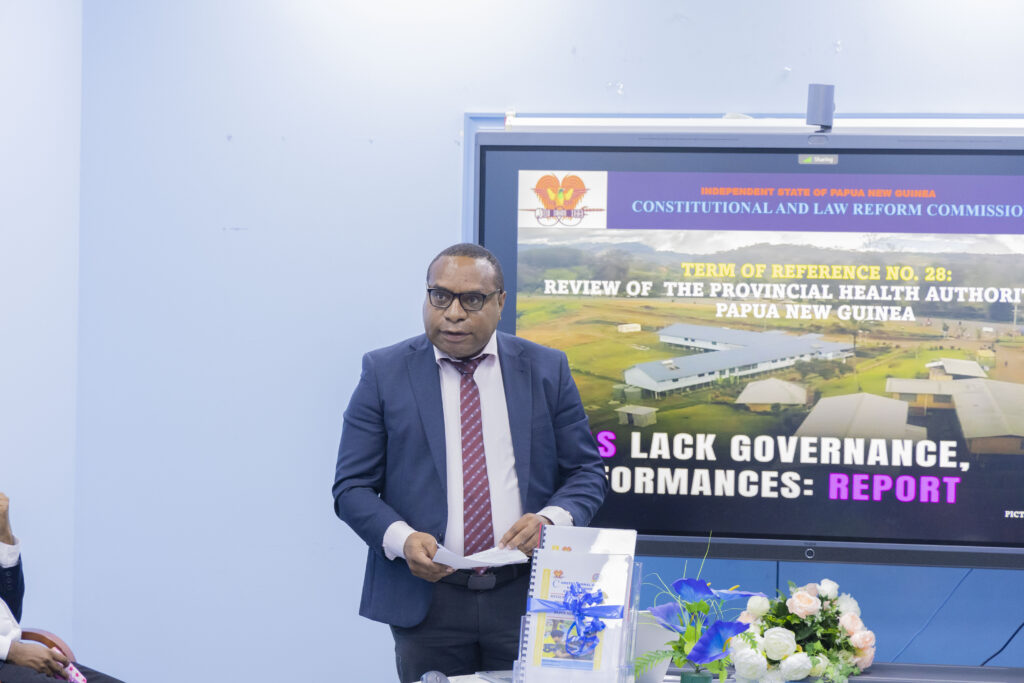
The Chairman said the review also aligns with Papua New Guinea’s broader national development aspirations, including the National Goals and Directive Principles, Vision 2050 and the Medium-Term Development Plan IV (MTDP IV), particularly in strengthening human capital, improving the wellbeing of citizens and ensuring equitable access to essential services.
With the launching of TOR 28, CLRC is set to commence provincial consultations with relevant stakeholders, including the National Department of Health, Provincial Health Authorities, provincial and district administrations, health workers, civil society organisations, development partners and members of the public.
TOR 28 consultations will commence into several provinces namely Hela Province, Western Province, Morobe Province, East Sepik Province, New Ireland Province, Western Highlands Province, Manus Province and the National Capital District. CLRC will be accepting written submissions and encourages public participation in the online consultations for TOR 28.
The Commission emphasises that the Issues Paper for TOR 28 is not a final position on the reform of the PHA system. It is intended to identify key issues within the existing legal and administrative framework and provide a basis for further discussions and public input.
The CLRC is therefore calling on stakeholders and members of the public to participate in the consultation process and share their experiences, concerns and recommendations on how the legal framework governing Provincial Health Authorities can be strengthened.
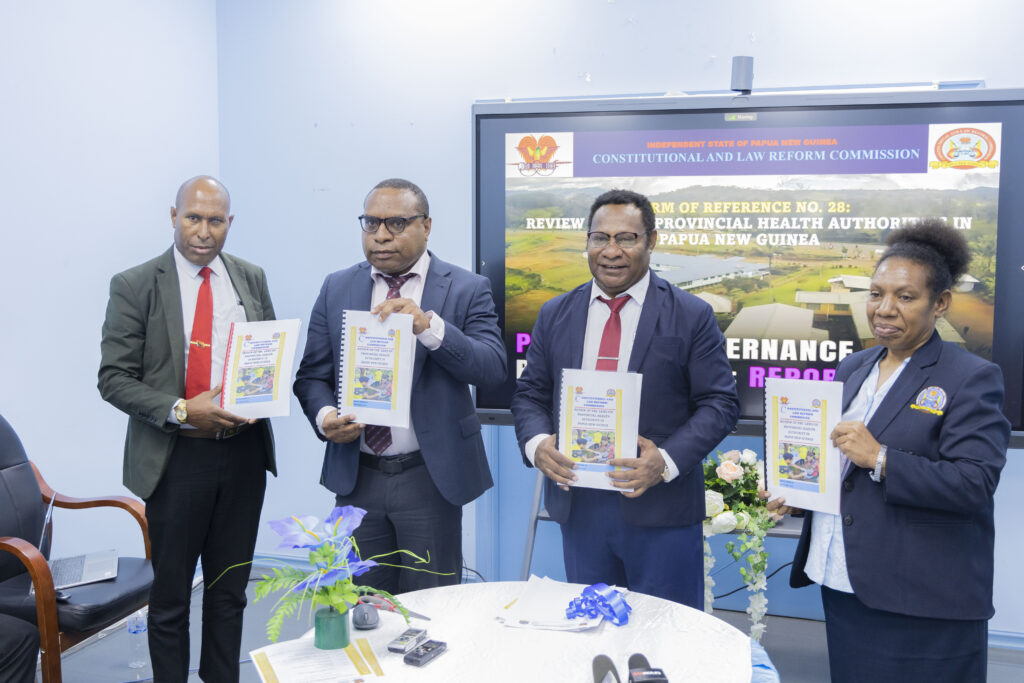
As the independent mandated agency responsible for law review and reform in Papua New Guinea, TOR 28 is expected to contribute to stronger governance, clearer institutional responsibilities, improved coordination and greater accountability within the health system.